Highway of the Dead Smart Backpack & Crate Organisation
Empty cells, merge lanes, and layouts that keep weapon climbs alive.
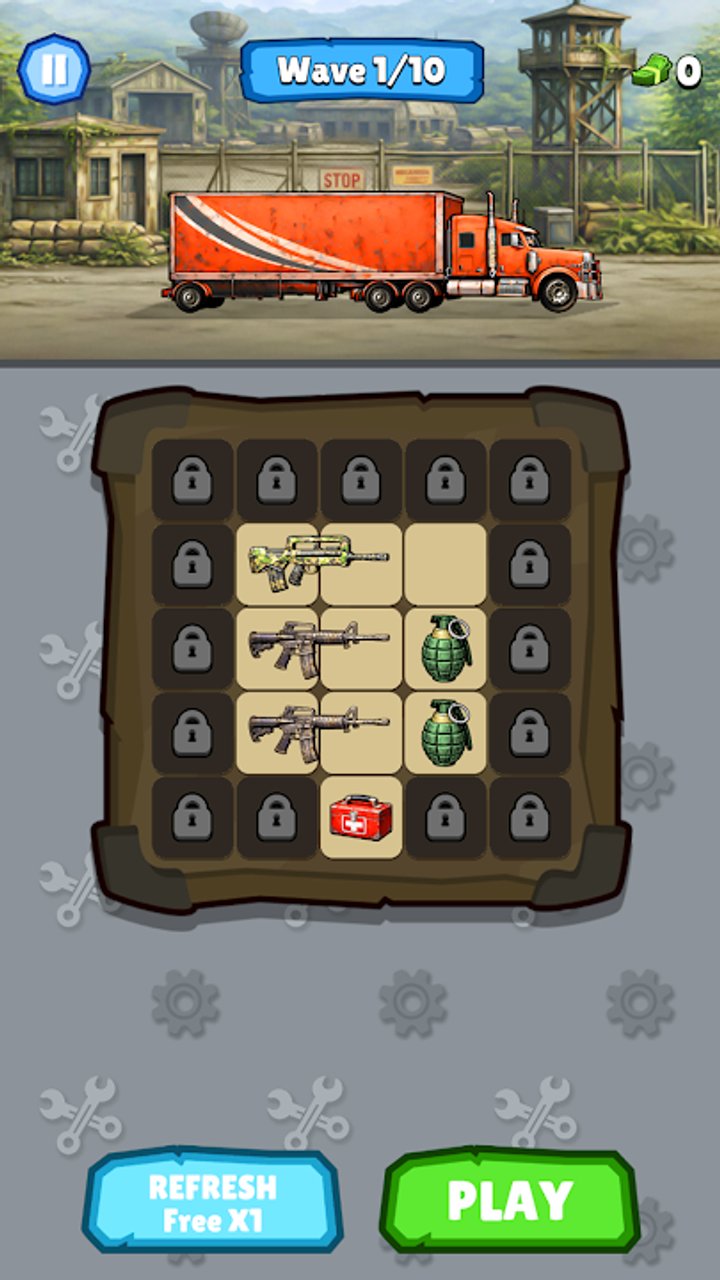
Backpack management is the real boss fight in Highway of the Dead. Zombie waves test the loadout you prepared; the crate or backpack grid decides whether that loadout can grow. Players who treat organisation as an afterthought hit storage walls early — the same pressure reviews mention when ads for slots appear after the first levels. Players who treat empty cells as a resource climb merge tiers faster and often feel like they have “infinite damage” simply because their guns kept evolving.
This guide pairs with the checklist on the Tools Hub and the decision rules in Merge Weapons. New players should skim Getting Started first.
Why layout beats raw drop luck
Loot is noisy. The grid is deterministic once items exist. Good organisation:
- Creates contiguous space for awkwardly shaped guns.
- Puts duplicates within a move or two of each other.
- Separates active weapons from fodder.
- Leaves a landing zone for the next wave’s rewards.
- Reduces panic purchases of storage.
Bad organisation scatters one-cell holes, traps high-tier guns behind junk, and forces you to sell or feed items you meant to save.
Core layout concepts
1. Merge lane
Pick an edge or corner as the active climb for your priority gun line (see Weapons Tier List). Keep that lane visually obvious. When loot drops, slide matching pieces toward the lane before you touch anything else.
2. Buffer strip
Beside the lane, keep a thin buffer of flexible cells. Buffers absorb weird shapes without breaking the lane’s geometry.
3. Fodder pocket
Low-value duplicates and temporary junk live opposite the lane. You should be willing to merge or clear fodder first whenever space hits critical.
4. Landing zone
Never end an organise phase at literal zero empty cells if the next reward is multi-item. Two to four free cells is a healthier default than “full means I played efficiently.”
Step-by-step between waves
- Glance count empty cells and the largest open rectangle.
- Pull duplicates toward the merge lane.
- Resolve one blocked pair by moving a single blocker when possible.
- Apply merge go / no-go from Merge Weapons or Tool 2 on the Tools Hub.
- Restack fodder into the pocket; do not leave islands.
- Recheck landing zone before you tap into combat.
If this routine takes more than a minute, your bag is already too messy — spend a wave’s worth of time cleaning instead of forcing another fight.
Patterns that work
| Pattern | Use when | Risk |
|---|---|---|
| Edge merge lane | Climbing one primary gun line | Neglecting a second line |
| Twin lanes | Mid-game with two viable A-tier lines | Splitting attention too early |
| Central open well | Waiting on large shapes | Longer travel for duplicates |
| Tight packed + planned merge | Expert players mid-chain | Bricking if a drop is awkward |
Beginners should master one edge lane before twin setups.
Storage slots, ads, and IAP
Highway of the Dead is fair about optional rewarded ads, but slot hunger is real. Before you watch an ad or buy space:
- Merge every safe pair that frees cells.
- Collapse fodder.
- Confirm you are not holding three unfinished C-tier vanity chains.
- Read whether the next truck module or weapon upgrade would help more (Truck Upgrades).
Extra slots help when your average loot volume exceeds what cleanup can fix. They are a poor bandage for never merging.
Synergy with teams and upgrades
A clean bag feeds higher-tier guns into the fight, which is what character damage on the Players Hub multiplies. Modules and weapon levels from the 0.3.9+ era amplify whatever you successfully field — they do not delete footprint problems. After patches listed on the Updates Hub, retest whether new item shapes need a wider buffer.
Advanced habits
- Pre-place ghosts: Imagine where the next merged shape will sit before you confirm the merge.
- Sacrifice with intent: Feeding a stuck piece is better than losing a whole wave to zero space.
- Session goals: “Free four cells” is a valid goal card (Tools Hub).
- Late-game ease: When upgrades are maxed and content feels easy, use layout challenges (fewer slots used, delayed merges) to keep the puzzle sharp while you wait on new content.
Related pages
- Merge Weapons — when holding beats merging
- Tips and Tricks — quality-of-life habits
- Tier List Hub — which lines deserve the lane
- Codes Hub — no, codes will not tidy your bag
- Wiki Overview — full game context
Treat every organise screen like a tiny puzzle stage. The highway gets longer, but the grid size only grows when you pay for it — skill is the expansion you always own.
Frequently Asked Questions
Quick answers to the most common Highway of the Dead questions.
What is a merge lane?
A dedicated edge or corner of the backpack where you keep the gun line you are actively climbing so duplicates can meet without shuffling the whole crate.
How many empty cells should I keep?
Aim for at least two to four before a wave when you expect multiple drops. Zero-cell starts are how bags brick.
Should I buy storage as soon as ads offer it?
Not first. Clean merges and fodder, then expand if loot volume still exceeds what layout can fix.
Does bag skill still matter after max upgrades?
Yes for speed and for self-imposed challenge. Reviews note late-game ease; layout mastery remains the deepest toy in the loop.
Where can I practise these ideas visually?
Use the smart bag organisation video on this page, then apply the Tools Hub checklist between your own waves.